The Shift Toward Skill-Based Learning: Why Modern Education Prioritizes Practical Knowledge
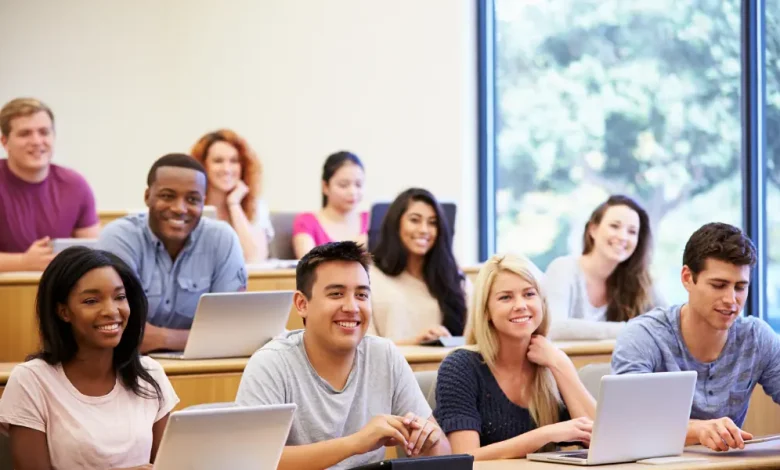
For decades, the traditional classroom was a place of rote memorization, heavy textbooks, and standardized testing that favored the ability to recall facts over the ability to apply them. However, the global economy has undergone a seismic shift. In an era where information is available at the touch of a button, the value of knowing a fact has been eclipsed by the value of knowing what to do with it. Modern education systems are now pivoting toward practical knowledge, prioritizing experiential learning, vocational training, and soft skill development to prepare students for a rapidly evolving professional landscape.
The Obsolescence of Rote Memorization
The primary driver behind the move toward practical education is the changing nature of information. In the mid-twentieth century, an educated person was often defined by the volume of information they carried in their head. Today, search engines and artificial intelligence have made biological data storage less critical.
When students spend the majority of their time memorizing dates, formulas, or anatomical lists without context, they often struggle to retain that information once the exam is over. Practical education seeks to solve this by anchoring theoretical concepts in real-world application. For instance, learning physics through the construction of a bridge model allows a student to see the immediate consequences of structural integrity and tension, turning an abstract formula into a tangible reality.
Closing the Global Skills Gap
Employers across nearly every sector—from software engineering to healthcare—report a growing gap between what students learn in college and what they are expected to do on the first day of work. This skills gap is a significant economic hurdle. Modern education is attempting to bridge this divide by integrating industry-standard tools and workflows into the curriculum.
-
Project-Based Learning (PBL): Instead of isolated assignments, students work on long-term projects that mirror professional environments.
-
Internships and Co-ops: Academic credit is increasingly awarded for work experience, allowing students to navigate office dynamics and professional expectations before graduation.
-
Technical Literacy: Education now prioritizes the mastery of software and hardware used in the field, ensuring that graduates do not require months of remedial training upon hiring.
The Rise of the Gig Economy and Entrepreneurship
The traditional career path of staying with a single company for forty years is largely a thing of the past. The modern workforce is defined by the gig economy, freelancing, and the pursuit of entrepreneurial ventures. These paths require a level of self-sufficiency that traditional academic models rarely addressed.
Practical education fosters an entrepreneurial mindset. It teaches students how to manage budgets, pitch ideas, and iterate on products. When a student learns how to build a website, market a service, or manage a small-scale supply chain within a classroom setting, they gain the confidence to navigate an economy that rewards versatility and initiative over mere compliance.
Enhancing Critical Thinking and Problem-Solving
One of the greatest misconceptions about practical knowledge is that it comes at the expense of intellectual rigor. In reality, applying a concept to a messy, unpredictable real-world scenario requires a higher level of cognitive function than simply repeating a definition.
When students are faced with a practical challenge, they must engage in lateral thinking. They have to troubleshoot errors, manage limited resources, and collaborate with peers who may have different perspectives. This environment cultivates “soft skills” like emotional intelligence, negotiation, and resilience—traits that are consistently ranked by CEOs as the most desirable qualities in a candidate.
The Psychological Benefits of Tangible Results
There is a profound psychological difference between receiving a letter grade on a paper and seeing a functional piece of code or a harvested garden. Practical education taps into the human need for efficacy—the belief that one’s actions can produce a desired result.
This sense of accomplishment boosts student engagement and reduces the burnout often associated with high-stakes testing. When students see the direct utility of what they are learning, their intrinsic motivation increases. They are no longer asking “Why do I need to know this?” because the answer is evident in the work they are performing.
Modern Pedagogical Strategies for Practical Learning
To facilitate this shift, schools and universities are redesigning their physical and digital spaces. We see the rise of “Maker Spaces” equipped with 3D printers, laser cutters, and electronics benches. We also see a shift in how subjects are categorized, moving away from siloed departments toward interdisciplinary studies.
Interdisciplinary Integration
Modern problems do not exist within the vacuum of a single subject. Climate change, for example, is a biological, political, economic, and ethical issue. A practical education approaches this by having students tackle the problem from multiple angles simultaneously.
-
Science: Understanding the chemical processes of carbon sequestration.
-
Economics: Calculating the cost-benefit analysis of renewable energy transitions.
-
Communication: Drafting persuasive policy briefs to influence public opinion.
Technology as a Tool, Not a Distraction
While older models of education often viewed technology as a distraction to be managed, modern practical education views it as the primary medium of work. Coding is becoming a foundational literacy, much like reading and writing. By teaching students how to use AI responsibly, how to verify data sources, and how to utilize digital collaboration tools, schools are preparing them for a workplace that is digital-first.
The Economic Reality of Higher Education
As the cost of tuition continues to rise, students and their families are looking for a higher return on investment. The demand for “job-ready” degrees has forced institutions to justify their existence through the lens of employability. This has led to a resurgence in vocational training and the “professionalization” of the liberal arts.
Even traditional humanities programs are incorporating practical components. A history major might now learn digital archiving or museum curation, while a philosophy major might focus on the ethics of emerging technologies. This evolution ensures that the deep thinking of the humanities is paired with the practical skills necessary to navigate the modern job market.
Conclusion
The prioritization of practical knowledge is not a trend but a necessary adaptation to a world that moves faster than textbooks can be printed. By focusing on how to apply information, how to solve complex problems, and how to work effectively with others, modern education is finally aligning itself with the realities of the twenty-first century. The goal is no longer just to produce a person who knows a lot, but to empower a person who can do a lot.
Frequently Asked Questions
Does a focus on practical knowledge mean that theoretical learning is no longer important?
Theoretical learning remains the foundation of all practical application. You cannot effectively build a bridge without understanding the laws of physics. However, the modern approach is to teach theory and practice concurrently rather than treating theory as an isolated prerequisite. Theory provides the “why,” while practice provides the “how.”
How do practical education models handle standardized testing?
This is one of the ongoing challenges in education reform. Many systems are moving away from traditional multiple-choice exams in favor of portfolios, capstone projects, and performance-based assessments. These methods provide a more holistic view of a student’s capabilities than a single standardized test score.
Are these practical learning methods applicable to all age groups?
Yes, though the implementation varies. In elementary education, it might look like sensory play or basic gardening. In high school, it may involve internships or lab-based research. The core principle—learning by doing—is effective at every stage of human development.
Will the emphasis on practical skills make degree programs shorter?
In some cases, yes. We are seeing a rise in “micro-credentials” and certificate programs that focus on specific, high-demand skills. These allow individuals to enter the workforce faster. However, full degree programs are also evolving to include more hands-on components within the standard four-year timeframe.
Is practical education more expensive for schools to implement?
Initially, yes. Setting up labs, purchasing technology, and training teachers in new methodologies require significant investment. However, many institutions find that these costs are offset by higher student retention rates and stronger partnerships with industry donors who want to support programs that produce skilled graduates.
How does practical education prepare students for jobs that do not exist yet?
By focusing on “meta-skills”—learning how to learn, critical thinking, and adaptability. Practical education teaches students how to tackle unfamiliar problems using the tools at hand. This flexibility is the best defense against a shifting job market, as the ability to pivot and acquire new skills is the most practical skill of all.
Does this shift affect the social aspects of schooling?
Actually, practical education often increases social interaction. Because real-world work is rarely done in isolation, classroom projects usually require teamwork and communication. This helps students develop the interpersonal skills that are often missed in traditional lecture-based environments.